Gastric sleeve and gastric bypass are two of the most commonly performed bariatric procedures in Australia. Both can support significant, long-term weight loss, but they work differently and have different benefits, risks, and considerations.
If you are considering weight loss surgery, understanding how these procedures differ can help you prepare for a conversation with Dr Ashok. This guide compares how gastric sleeve and gastric bypass work, their potential benefits and risks, weight loss outcomes and recovery, and the factors that may influence which procedure is more appropriate for you.
How Gastric Sleeve and Gastric Bypass Surgery Work
Gastric sleeve and gastric bypass both reduce food intake and support weight loss, but they do so differently.
Gastric sleeve (sleeve gastrectomy): A large portion of the stomach is removed, leaving a narrower, tube-shaped stomach. This reduces how much food the stomach can comfortably hold and also affects hormones involved in hunger and fullness. The intestinal pathway remains unchanged.
Gastric bypass (typically Roux-en-Y): A small stomach pouch is created and connected directly to a lower section of the small intestine. Food therefore bypasses most of the stomach and part of the small intestine, reducing how much you can eat and changes how calories and nutrients are absorbed. The procedure also affects gut hormones involved in appetite and fullness.
In simple terms, gastric sleeve mainly reduces stomach capacity, while gastric bypass reduces stomach capacity and changes the way food passes through the digestive system. Both procedures are usually performed using keyhole (laparoscopic) surgery.
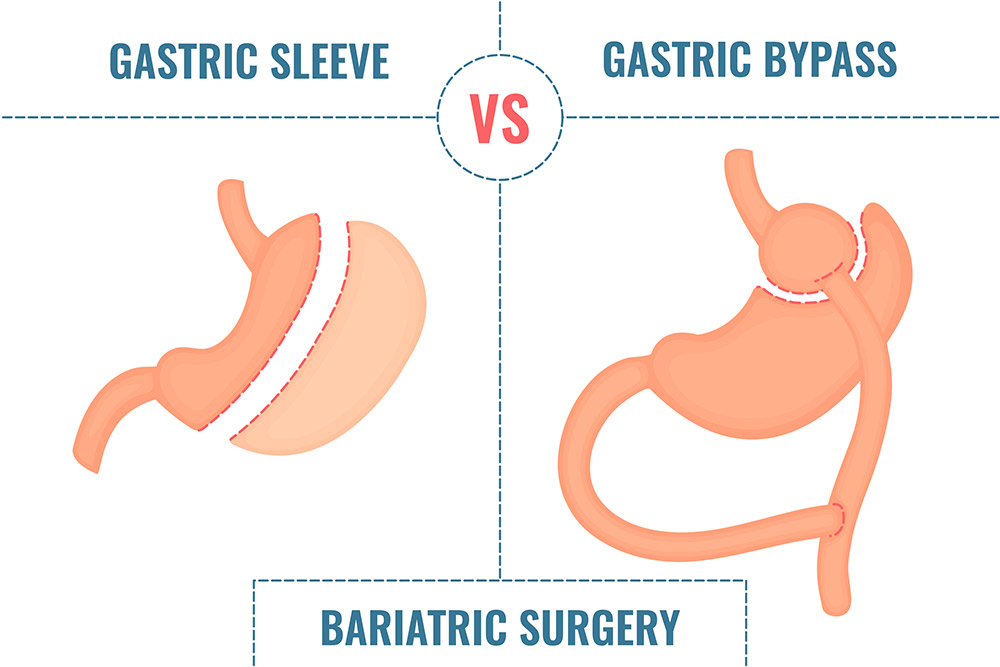
Gastric sleeve and gastric bypass work differently, so the best choice depends on individual circumstances.
Gastric Sleeve vs Gastric Bypass Surgery: Key Differences at a Glance
| Gastric Sleeve | Gastric Bypass | |
|---|---|---|
| How it works | Removes part of the stomach, leaving a smaller, tube-shaped stomach | Creates a smaller stomach pouch and reroutes part of the small intestine |
| Intestine altered | No | Yes |
| Reversible | No, because part of the stomach is permanently removed | Reversal is technically possible in some circumstances, but is more complex |
| Effect on reflux | May worsen or contribute to reflux in some patients | May improve reflux in some patients |
| Nutrient absorption | Generally remains largely unchanged | Some nutrient absorption is reduced, so lifelong nutritional supplementation and monitoring are required |
| Complexity | Does not involve intestinal rerouting | Involves rerouting part of the small intestine |
Pros and Cons of Gastric Sleeve Surgery
Gastric sleeve surgery is generally a less complex procedure than gastric bypass and does not involve altering the small intestine. As with any surgical procedure, it has potential benefits and risks that need to be considered on an individual basis.
Potential advantages may include:
No intestinal bypass: The small intestine remains in its normal pathway, so the procedure does not intentionally reduce nutrient absorption.
Simpler nutritional management: As the digestive tract is not rerouted, the risk of certain nutritional deficiencies is generally lower than with gastric bypass, although supplements and ongoing monitoring may still be required.
Weight loss: A gastric sleeve can support significant weight loss when combined with ongoing dietary and lifestyle changes.
Considerations may include:
Reflux: A gastric sleeve may cause or worsen reflux in some patients.
Not reversible: Part of the stomach is permanently removed during the procedure.
Surgical risks: As with any operation, gastric sleeve carries potential risks and complications, which we will discuss during your assessment.
Pros and Cons of Gastric Bypass Surgery
Gastric bypass is a more complex procedure that changes both stomach size and the pathway through the small intestine.
Potential advantages may include:
Weight loss: Gastric bypass can support significant weight loss, although outcomes vary between individuals.
Potential benefits for some health conditions: Gastric bypass may improve some obesity-related health conditions, including type 2 diabetes, although outcomes vary between individuals.
Reflux: Gastric bypass may improve reflux symptoms in some patients and may be considered when reflux is also a concern.
Considerations may include:
Greater surgical complexity: The procedure involves creating a stomach pouch and rerouting part of the small intestine, with additional surgical considerations and potential complications.
Nutritional deficiencies: As nutrient absorption is affected, lifelong vitamin and mineral supplementation and regular nutritional monitoring are generally required.
Other potential complications: These can include internal hernia and dumping syndrome, among other risks.
These lists provide a general overview and are not exhaustive. The potential benefits, risks and suitability of each procedure vary between individuals and will be discussed during an individual assessment with Dr Ashok.
Weight Loss Results: How the Two Procedures Compare
Both gastric sleeve and gastric bypass can support significant weight loss when combined with long-term dietary and lifestyle changes. Weight loss varies by individual, and while gastric bypass may produce greater average weight loss for some patients, that doesn’t mean it will necessarily produce a better outcome for everyone.
Your results can be influenced by factors including:
- Your starting weight and overall health
- The procedure performed
- Any weight-related health conditions
- Your ability to maintain recommended dietary and lifestyle changes over the long term
Outcomes do vary, however, and cannot be guaranteed. Dr Ashok can discuss the potential outcomes and factors relevant to your circumstances during your consultation.

Recovery from gastric sleeve or bypass surgery varies by person, but usually involves a short hospital stay, gradual return to activity, staged diet progression and ongoing follow-up.
Recovery After Gastric Sleeve and Gastric Bypass Surgery
Both procedures involve surgery and carry potential risks, including bleeding, infection, blood clots and complications related to anaesthesia. Specific risks and the recovery process can differ between procedures and individuals.
Recovery may involve:
A hospital stay: Many patients remain in hospital for a few days following surgery, although the length of stay varies.
Gradual return to activity: Light activities are generally resumed progressively, with your care team advising when you can return to normal activities and exercise.
Dietary progression: Your diet is gradually reintroduced following surgery, typically progressing from liquids to soft foods and eventually to a more regular diet according to your surgeon’s instructions.
Ongoing follow-up: Regular appointments help monitor your recovery, nutrition, weight loss and overall health.
Your care team will provide personalised recovery and aftercare instructions based on the procedure you undergo and your individual circumstances.
How the Most Appropriate Procedure is Chosen
The choice between gastric sleeve and gastric bypass is based on an individual clinical assessment, which may consider factors such as:
- Your BMI and overall health
- Weight-related health conditions, such as type 2 diabetes or reflux
- Your previous weight-loss history
- Your nutritional needs and personal goals
At OptiWeight, the decision is based on your individual circumstances rather than a fixed approach. As Dr Ashok Gunawardene performs both procedures, he can explain how each works and discuss their potential benefits, risks and limitations before you decide whether weight loss surgery is appropriate for you.
We Can Help You Consider Your Options at OptiWeight
Deciding between gastric sleeve and gastric bypass is a significant and personal decision, and it is one you do not have to make alone. At OptiWeight, specialist general surgeon Dr Ashok Gunawardene and the wider team can help you understand each option and consider which may be appropriate for your circumstances.
A consultation is an opportunity to ask questions, discuss your health history and understand the potential benefits, risks and alternatives before deciding on any pathway.
Frequently asked questions
What is the difference between gastric sleeve and gastric bypass?
The main difference is how the two procedures affect the digestive system. A gastric sleeve removes part of the stomach, leaving a smaller stomach that limits how much food you can eat. A gastric bypass creates a smaller stomach pouch and reroutes part of the small intestine, changing both food intake and nutrient absorption. The sleeve leaves the intestine unchanged, while the bypass alters the digestive pathway.
Is gastric bypass more effective than gastric sleeve?
Gastric bypass may result in greater average weight loss than gastric sleeve in some studies, although individual outcomes vary and a greater amount of weight loss does not necessarily mean it is the more appropriate procedure for every patient.
How much weight can you lose with gastric sleeve vs gastric bypass?
Both procedures can support significant, long-term weight loss, although gastric bypass may result in greater average weight loss for some patients. Individual results vary depending on factors such as your starting weight, overall health, the procedure, and your ability to maintain recommended dietary and lifestyle changes. Weight loss cannot be guaranteed, and Dr Ashok can discuss what may be realistic for your circumstances.
Does gastric bypass have more risks than gastric sleeve?
The two procedures have different risks and considerations. Gastric bypass is more complex and can affect nutrient absorption, so it requires lifelong nutritional supplementation and monitoring. Gastric sleeve does not involve intestinal rerouting but may cause or worsen reflux in some patients. Both procedures also carry general surgical risks. Dr Ashok will discuss the potential risks relevant to you as part of your individual assessment.
How do I choose between gastric sleeve and gastric bypass?
The choice is based on an individual clinical assessment rather than a set rule. Factors such as your BMI, overall health, weight-related conditions, reflux symptoms, nutritional needs and personal goals may all be considered. Dr Ashok can explain the potential benefits, risks, and limitations of both procedures to help you make an informed decision about whether surgery, and which procedure, may be appropriate for you.
This page is general information only and is not a substitute for personalised medical advice. Weight loss surgery and non-surgical weight loss are significant decisions with benefits and risks that differ for each person. Outcomes vary and cannot be guaranteed. Please consult Dr Ashok Gunawardene or your GP to discuss whether a procedure is appropriate for your individual circumstances.